For our first form of Audience Research we decided to directly speak to people in the form of an interview.We decided to ask questions needed to give us an idea of what people of all ages enjoy in Thriller, and what they expect from them.Opinions were also important as it gives us a closer insight into what they do not enjoy in a thriller so we can not make the same mistakes as some Thrillers made. We have decided to do an Open questionnaire as it is more likely to give us the information we need.
I interviewed a mixture of genders and ages.
My Interview
First person- Age 16, Male
Second Person- Age 27, Female
Third Person- 45, Female
What do you expect from a good Thriller?
First: A twist in the storyline and a mystery
Second: Cliffhangers, jumps
Third: Entertainment, Racing heart
What do you enjoy in a Thriller?
First: Believable character, watching closely to not miss anything, confusion, leading you to believe something else
Second: Different character personalities, big climax in storyline
Third: Good storyline, believable characters
How would you describe a Thriller?
First: Always gets you thinking, your always on the edge of your seat
Second: Scary, Real -life (believable), dark, jumpy, tense, scary music
Third: Tense, Jumpy, Keeps your on the edge of your seat
What makes a good opening to a Thriller?
First: The start of the Thriller shows the ending of it (creates confusion), mystery
Second: Gets your questioning, tense music
Third: Immediately catches your attention, big beaty music, you question until the end of film (doesn't give anything away)
Your favourite Thriller?
First: Inception because the start of the film shows the ending. The credits of Inception also show the mystery as the title 'Inception' is made out of a map
Second: Taken because of the suspense
Third: Fracture because it is about outwitting a cold hearted murderer and the tension
Thursday, 22 November 2012

Wednesday, 21 November 2012
Audience Research -Interviews
When establishing which methods of audience research to use, I think the best methods to use is an online survey to perhaps attract the teenager's opinions as they tend to use the internet more with social networking, and also do individual interviews to grab the middle aged/older citizen's opinions.
In the interviews we need to provide direct, specific questions that relate to our task in order to make our audience research as beneficial as possible. We need to ask questions that involve their likes/dislikes, their favourite thriller films, what they tend to expect, sub-genres and then link to a thriller opening. For an interview, open questions tend to be used to receive answers which include more detail, opinions and feelings. Whereas when a questionnaire is being provided, closed questions tend to be used which involve single answers, short phrases and also yes or no. They usually include tick boxes. They are more convenient and easy for the audience but you don't get as much detail as you would with interviews.
An example of a closed question would be "What sub-genre of a thriller would attract or interest you most out of the following? (please tick the boxes)"
-Action
-Psychological
-Crime
-Historical
-Mystery
An example of an open question would be "What do you dislike the most about thriller films?".
Anna's Interview:
I have decided to interview 3 people, the ages I have included are a male of 19 years (person 1), a female of 45 years (person 2) and another male of 50 years (person 3). This will help give an insight as to whether middle aged people are interested in Thriller films and if they are attracted by them. But it will also give me an idea if teenagers are interested as well.
"What do you expect from a good film? e.g. characters, camera angles, storyline, special effects etc.
Person 1: Good use of actors, something different about it. If British film, it will attract me more as good actors sucha as Colin Firth will be used.
Person 2: Well known actors involved with a good, interesting storyline. A film that engages the brain. If a humorous film, needs to be able to make me laugh. If a Thriller film, I would want to be genuinely scared which includes a good atmosphere within the audience.
Person 3: Has to have a unique style which includes a different storylines to other films.
"What is your favourite Thriller film and what made it enjoyable?"
Person 1: Inception. I think it is a good film as it is mind twisting and captivating as its about a dream inside a dream and so on. It engages the brain because it is a mystery and it keeps the audience like myself interested.
Person 2: My favourite thriller film would be Taken as when I was watching it, I didn't know what would happen next. It kept me captivated with the motivated cuts involved. I felt I could relate to the storyline as I am a mother of the same aged girl.
Person 3: The Silence of the Lambs. I enjoyed this film as it is plausible and well acted. It brought a good, unique storyline out into the world at the time. It was ahead of its time.
"How would you describe a Thriller film?"
Person 1: Camera angles from the antagonist's point of view to give to sense to the protagonist's that someone is watching them. Built up of tension in many parts to excite and build up hype of the audience.
Person 2: Dramatic, spooky feel, mind twisting. The music involved to be pitchy and strong. I would expect there to be occasional silences. Perhaps the music included would be recorded by an orchestra- non-diegetic sound.
Person 3: Weather conditions to be gloomy, dark and foggy or raining. Tracking of the cameras moving stealthily down corridors.
"What attracts you most in a Thriller film?"
Person 1: Good actors, action involved, fast speed and adrenaline pumping. An interesting, different storyline.
Person 2: Adventure, excitement. Usually completely different from normal way of life.
Person 3: Plausible storylines, fast pace, exciting.
"What makes a good Thriller opening in your opinion? E.g. music, camera."
Person 1: Introduction to some characters, clue of location. Motivated cuts included to hype the audience.Built up tension used by different pitches of music.
Person 2: Action sceme, perhaps a preview of what's about to happen- keeps the audience intrigued.
Person 3: Built up of suspense. Powerful imagery which draws attention and creates focus for the rest of the film.
"What sub-genre of a Thriller would interest or attract you the most?"
Person 1: Action, mystery, historical.
Person 2: Adventure and mystery.
Person 3: Historical, Serial Killer, Crime.
"What do you dislike the most about Thriller films?"
Person 1: Too complex, ridiculous, badly acted.
Person 2: Too realistic, if it ends with an anti-climax. -Need to end with Drama.
Person 3: Unrealistic, too long.
From looking at the results of my interview it shows that a wider range of people from different ages and gender is needed to discover what people really like to see in a thriller film. However, the interview does show that most males tend to have the same opinions, for example both the males I asked both said for 'what they thought makes a good thriller opening' that a good thriller opening needs to include a build up of tension and suspense.
I think to gain a real insight into what people may like, dislike or prefer in films, television programmes and in our case, the opening to our thriller film.
In the interviews we need to provide direct, specific questions that relate to our task in order to make our audience research as beneficial as possible. We need to ask questions that involve their likes/dislikes, their favourite thriller films, what they tend to expect, sub-genres and then link to a thriller opening. For an interview, open questions tend to be used to receive answers which include more detail, opinions and feelings. Whereas when a questionnaire is being provided, closed questions tend to be used which involve single answers, short phrases and also yes or no. They usually include tick boxes. They are more convenient and easy for the audience but you don't get as much detail as you would with interviews.
An example of a closed question would be "What sub-genre of a thriller would attract or interest you most out of the following? (please tick the boxes)"
-Action
-Psychological
-Crime
-Historical
-Mystery
An example of an open question would be "What do you dislike the most about thriller films?".
Anna's Interview:
I have decided to interview 3 people, the ages I have included are a male of 19 years (person 1), a female of 45 years (person 2) and another male of 50 years (person 3). This will help give an insight as to whether middle aged people are interested in Thriller films and if they are attracted by them. But it will also give me an idea if teenagers are interested as well.
"What do you expect from a good film? e.g. characters, camera angles, storyline, special effects etc.
Person 1: Good use of actors, something different about it. If British film, it will attract me more as good actors sucha as Colin Firth will be used.
Person 2: Well known actors involved with a good, interesting storyline. A film that engages the brain. If a humorous film, needs to be able to make me laugh. If a Thriller film, I would want to be genuinely scared which includes a good atmosphere within the audience.
Person 3: Has to have a unique style which includes a different storylines to other films.
"What is your favourite Thriller film and what made it enjoyable?"
Person 1: Inception. I think it is a good film as it is mind twisting and captivating as its about a dream inside a dream and so on. It engages the brain because it is a mystery and it keeps the audience like myself interested.
Person 2: My favourite thriller film would be Taken as when I was watching it, I didn't know what would happen next. It kept me captivated with the motivated cuts involved. I felt I could relate to the storyline as I am a mother of the same aged girl.
Person 3: The Silence of the Lambs. I enjoyed this film as it is plausible and well acted. It brought a good, unique storyline out into the world at the time. It was ahead of its time.
"How would you describe a Thriller film?"
Person 1: Camera angles from the antagonist's point of view to give to sense to the protagonist's that someone is watching them. Built up of tension in many parts to excite and build up hype of the audience.
Person 2: Dramatic, spooky feel, mind twisting. The music involved to be pitchy and strong. I would expect there to be occasional silences. Perhaps the music included would be recorded by an orchestra- non-diegetic sound.
Person 3: Weather conditions to be gloomy, dark and foggy or raining. Tracking of the cameras moving stealthily down corridors.
"What attracts you most in a Thriller film?"
Person 1: Good actors, action involved, fast speed and adrenaline pumping. An interesting, different storyline.
Person 2: Adventure, excitement. Usually completely different from normal way of life.
Person 3: Plausible storylines, fast pace, exciting.
"What makes a good Thriller opening in your opinion? E.g. music, camera."
Person 1: Introduction to some characters, clue of location. Motivated cuts included to hype the audience.Built up tension used by different pitches of music.
Person 2: Action sceme, perhaps a preview of what's about to happen- keeps the audience intrigued.
Person 3: Built up of suspense. Powerful imagery which draws attention and creates focus for the rest of the film.
"What sub-genre of a Thriller would interest or attract you the most?"
Person 1: Action, mystery, historical.
Person 2: Adventure and mystery.
Person 3: Historical, Serial Killer, Crime.
"What do you dislike the most about Thriller films?"
Person 1: Too complex, ridiculous, badly acted.
Person 2: Too realistic, if it ends with an anti-climax. -Need to end with Drama.
Person 3: Unrealistic, too long.
From looking at the results of my interview it shows that a wider range of people from different ages and gender is needed to discover what people really like to see in a thriller film. However, the interview does show that most males tend to have the same opinions, for example both the males I asked both said for 'what they thought makes a good thriller opening' that a good thriller opening needs to include a build up of tension and suspense.
I think to gain a real insight into what people may like, dislike or prefer in films, television programmes and in our case, the opening to our thriller film.
Audience Research- Interviews
What is your favourite sub-genre for a thriller and why?
Answer 1 aged 49 (man):
My faviourite sub genre is a crime thriller, due to you not knowing fully whats going to happen until the climax of the film.
Answer 2 aged 19 (man):
I like an action thriller due to the intense fight scenes and there normally being a strong battle between a good character and a bad character
Answer 3 aged 49 (woman)
i like to watch thrillers that i have read a book of because i like to see if the intensity is portrayed in the film
Faviourite thriller film and why?
Answer 1
My faviourite film is probably Harry Brown due to it being very easy to relate to for me and that it has a strong meaningful storyline
Answer 2
My faviourite thriller is deja vu with denzel washington i like this because i like the full on action through out the film and the tension between the two main characters, and denzel washington is my faviourite actor
Answer 3
I like the films of the Millenium trilogy, due to me having read all three books and enjoyed them. i watched the films and they reached my expectations because they had me gripped all film long
What do you not like about thrillers?
Answer 1
I dislike thrillers when the storyline is very obvious and there is a lack of mystery, i like to find out what happens at the very end
Answer 2
I dont like a love story in a thriller, i like it when its all about the storyline
Answer 3
I dont like thrillers when there is too much action and explosions i like it to have me on the edge of my seat, but not to make me jump and be scary
Answer 1 aged 49 (man):
My faviourite sub genre is a crime thriller, due to you not knowing fully whats going to happen until the climax of the film.
Answer 2 aged 19 (man):
I like an action thriller due to the intense fight scenes and there normally being a strong battle between a good character and a bad character
Answer 3 aged 49 (woman)
i like to watch thrillers that i have read a book of because i like to see if the intensity is portrayed in the film
Faviourite thriller film and why?
Answer 1
My faviourite film is probably Harry Brown due to it being very easy to relate to for me and that it has a strong meaningful storyline
Answer 2
My faviourite thriller is deja vu with denzel washington i like this because i like the full on action through out the film and the tension between the two main characters, and denzel washington is my faviourite actor
Answer 3
I like the films of the Millenium trilogy, due to me having read all three books and enjoyed them. i watched the films and they reached my expectations because they had me gripped all film long
What do you not like about thrillers?
Answer 1
I dislike thrillers when the storyline is very obvious and there is a lack of mystery, i like to find out what happens at the very end
Answer 2
I dont like a love story in a thriller, i like it when its all about the storyline
Answer 3
I dont like thrillers when there is too much action and explosions i like it to have me on the edge of my seat, but not to make me jump and be scary
Tuesday, 20 November 2012
Audience Research Methods
Different audience research methods used can help us as a group to identify what aspects are important at the beginning of a thriller film, the type of audience that watch thrillers and how we can entice the audience at the start. This will help us establish what target audience to aim our thriller opening at.
Different audience research methods include; Questionnaires,Interviews, Focus groups, Online questionnaires and Data Collection.
Questionnaires
 A group of closed questions ask to the public, or your audience to extract specific information you want to know for research.
A benefit to a questionnaire is that you receive useful information quick and it is easy. You can also give a questionnaire to a large portion of your audience or the public without wasting time.
A drawback to using a questionnaire is that the public partaking in the questionnaire may not be able to explain their reasons for this as it is a closed question, so you do not receive as much information and it may not be very strong.
Interview
 An interview is when the researcher will ask the public or audience open questions, they then extract information on what they want to know and follow up or probe their answers with ones to get more information and detail from them, in a conversational way.
A benefit to an interview is that you gain a better insight into the customers wants, their opinions, their likes and dislikes and there is no set questions meaning you can work your questions around their personal feelings.
A drawback to an interview is that it is time consuming. This is a problem because it is very informative but asking enough people and bringing the information we gathered together from everyone means it is hard to analyse and will take a long time.
Focus Groups
 A focus group is a small group of people who have a discussion about a particular product or in this case a topic. It aims on a discussion more than responses to formal questions.
Benefits of a focus group are that the researcher can get information from body language, by seeing a response like this they can tell how they feel about that specific topic, the information is also easy to get, you are able to probe more answers and gain a deeper knowledge of their views and opinions and you can also gain the information quicker than if you interview people individually.
A drawback to a focus group is that focus groups may not be able to stay on topic and you can't gather the information you specifically need, the public may also feel peer pressure to answer like everyone else.
Online questionnaires
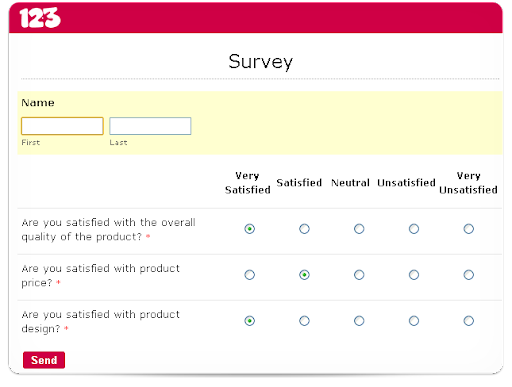 An Online questionnaire is a questionnaire that you created set up online for the general public to be able to complete. It can have open and closed questions on it.
Benefits to an online questionnaire is that is it usually free, fast and simple to set up, quick and accurate to gather results as the website that your survey is linked to will gather the information for you. Anyone can access it on the internet also meaning that it is more valid to the population because you do not have to send out and collect the questionnaires that may not be able to reach the general public but using the internet it is possible.
A drawback to an online questionnaire is that people may feel less obliged to take part because they have not been specifically asked to take the questionnaire, there also may be technical difficulties that could postpone or stop people being able to access it, both giving you a lack of information.
Data Collection
 Data Collection is done to gather secondary research online from existing websites to gain an insight into the likes and dislikes, the success and fail and general knowledge of the topics information you need, in this case about a specific genre.
Benefit to online secondary research is that the data is already collected meaning it is cheap, easy and quick to gather.
A drawback to this is that the information may not be specific to your topic that you are looking for, so it isn't completely relevant to you. You could also not gather information from reliable sources making your data wrong and you may base your idea or topic on that.
From the benefits and drawbacks we have decided that we will complete the secondary research data collection but make sure it is from reliable websites such as, boxofficemojo, IMDb and independent.bfi. We are also going to do a small interview consisting on 3 people each, all different ages and genders making it informative but not time consuming, we are also going to create an online survey giving people opportunities t fill it in and giving us a large, informative and representative result that we can use to help us find our target audience.
Different audience research methods include; Questionnaires,Interviews, Focus groups, Online questionnaires and Data Collection.
Questionnaires
 A group of closed questions ask to the public, or your audience to extract specific information you want to know for research.
A benefit to a questionnaire is that you receive useful information quick and it is easy. You can also give a questionnaire to a large portion of your audience or the public without wasting time.
A drawback to using a questionnaire is that the public partaking in the questionnaire may not be able to explain their reasons for this as it is a closed question, so you do not receive as much information and it may not be very strong.
Interview
 An interview is when the researcher will ask the public or audience open questions, they then extract information on what they want to know and follow up or probe their answers with ones to get more information and detail from them, in a conversational way.
A benefit to an interview is that you gain a better insight into the customers wants, their opinions, their likes and dislikes and there is no set questions meaning you can work your questions around their personal feelings.
A drawback to an interview is that it is time consuming. This is a problem because it is very informative but asking enough people and bringing the information we gathered together from everyone means it is hard to analyse and will take a long time.
Focus Groups
 A focus group is a small group of people who have a discussion about a particular product or in this case a topic. It aims on a discussion more than responses to formal questions.
Benefits of a focus group are that the researcher can get information from body language, by seeing a response like this they can tell how they feel about that specific topic, the information is also easy to get, you are able to probe more answers and gain a deeper knowledge of their views and opinions and you can also gain the information quicker than if you interview people individually.
A drawback to a focus group is that focus groups may not be able to stay on topic and you can't gather the information you specifically need, the public may also feel peer pressure to answer like everyone else.
Online questionnaires
An Online questionnaire is a questionnaire that you created set up online for the general public to be able to complete. It can have open and closed questions on it.Benefits to an online questionnaire is that is it usually free, fast and simple to set up, quick and accurate to gather results as the website that your survey is linked to will gather the information for you. Anyone can access it on the internet also meaning that it is more valid to the population because you do not have to send out and collect the questionnaires that may not be able to reach the general public but using the internet it is possible.
A drawback to an online questionnaire is that people may feel less obliged to take part because they have not been specifically asked to take the questionnaire, there also may be technical difficulties that could postpone or stop people being able to access it, both giving you a lack of information.
Data Collection
 Data Collection is done to gather secondary research online from existing websites to gain an insight into the likes and dislikes, the success and fail and general knowledge of the topics information you need, in this case about a specific genre.
Benefit to online secondary research is that the data is already collected meaning it is cheap, easy and quick to gather.
A drawback to this is that the information may not be specific to your topic that you are looking for, so it isn't completely relevant to you. You could also not gather information from reliable sources making your data wrong and you may base your idea or topic on that.
From the benefits and drawbacks we have decided that we will complete the secondary research data collection but make sure it is from reliable websites such as, boxofficemojo, IMDb and independent.bfi. We are also going to do a small interview consisting on 3 people each, all different ages and genders making it informative but not time consuming, we are also going to create an online survey giving people opportunities t fill it in and giving us a large, informative and representative result that we can use to help us find our target audience.
Our Audience
In Media Studies, audience is the term used to describe those who consume media texts. For instance, films, television programmes, newspapers, magazines etc. For many obvious reasons, media producers and institutions like to consider audiences in groups. To investigate how large their share of the mass market was, television companies and advertisers came together to perform new techniques of market research. This involved quantitative surveys where they attempted to count how many people they reached. Most commonly used was the system of television ratings which still today, has an enormous effect of the workings of TV stations.
We can divide our audience into two categories; demographic and psycho-graphic.
 Demographics involves the audience's:
-Gender
- Ethnicity
- Age (certification)
- Social Class
- Region
- Sexuality
- Religion
- Family
- Education/Occupation
Psycho-graphics involves the audience's:
-Interests
- Likes/dislikes
- Attitudes
- Ideology (your ideas of life)
- Beliefs
- Morals
- Values
We can divide our audience into two categories; demographic and psycho-graphic.
 Demographics involves the audience's:
-Gender
- Ethnicity
- Age (certification)
- Social Class
- Region
- Sexuality
- Religion
- Family
- Education/Occupation
Psycho-graphics involves the audience's:
-Interests
- Likes/dislikes
- Attitudes
- Ideology (your ideas of life)
- Beliefs
- Morals
- Values
Group Analysis of The Usual Suspects
The Usual Suspects is a crime thriller, written by Christopher McQuarrie and directed by Bryan Singer. The thriller which received 2 Oscars starred Stephen Baldwin and Kevin Spacey, the film includes a twisted storyline about a boat that was destroyed and the key to the mystery lies with the one survivor whose story leads to five crooks in a police line up.The conventions of a thriller are shown through the camera, editing, Mise-en-scene and sound to create tension and mystery.
Camera by Whole Group
In terms of camera, there is a frequent tilt involved to reveal an identity or a situation. For example when the fire is lit there is a slow tilt to establish the character on the boat urinating to prevent the fire from spreading any further. This presents a sense of mystery to the scene as the camera slowly reveals the body of the man but the tilt is cut just before the character's identity is shown.
Between cuts there is a zoom in on the ropes which gives a sense of voyeurism as to the audience, it feels as though the scene is being watched.
Mise-en-Scene by Aimée

Mise-en-scene is used to portray the thriller conventions into the opening of The Usual Suspects by creating tension and mystery. The location of this opening scene is firstly shown by the camera by using a pan, it is the sea and the pan of the camera that shows the wide range of emptiness which establishes the setting. The sense of being alone in this scene makes the audience possibly feel tense as to why it the characters in the scene are alone and if them being alone will create danger. The location is established in the scene with editing showing a matched cut and the camera showing a zoom on ropes giving the impression that they are on a boat, supporting the credits of the sea. The props in this scene give a sense of the characters and the mystery of the opening scene. After the credits you are introduced to the scene by matches being lit for a cigarette in a line which was then dropped into some fuel, this creates a sense of danger for the audience as fire may be hard to control, we are then shown another fire source later on in the scene which is a gold lighter.This may create tension as to whether the lighter is going to be used to create fire but it also shows the wealth and power that that character has in contrast to the box of matches. This is a binary opposition possibly showing the protagonist v antagonist or weak v powerful, the use of binary opposition create a tradition convention for a thriller. The wealth of this character is extended by the used of camera showing a close up of a gold watch. A eye-catching prop used to create apprehension is the leaking oil barrel, after seeing the fire being created by the small matches makes the audience realize the possibility and danger that there may be a fire. In the scene you are shown various dead bodies firstly by the fire passing one man and the wealthy man walking past another with a gun indicating he is the antagonist, this constructs the sub-genre for this Thriller that it is crime and violence which are main conventions of a thriller.The lighting of the scene is very dark but the characters are shown through a reaction shot when the lighting up of a cigarette from the gold lighter is used revealing the face; again fire being a hazard.The lightening at the end of the scene is brighter to show the character and his importance when he is speaking to the investigators.
Editing by Anna
In the first 5 minutes of Usual Suspects, editing is used to emphasize the slow motion and detail in the scene. A slow cutting rate is identified to show the slow motion of the cigarette dropping to provide a tense feeling to the audience as they know it won't be a wise action to do. The slow motion is supported by the build up of sound which is known as a crescendo. This helps the audience to build up excitement for what's to come in the film as sound plays a big part in making people tense and eager. This is also supported with the slow cutting rate.
Near the end of the first 5 minutes, a zoom in on an area of ropes is shown to portray the sense to the audience that someone is watching the scene which is called voyeurism, commonly used in thrillers. After the camera zooms in on the ropes, editing is used to use the effect of dissolving to help hint to the audience that the next scene where the first character that speaks was the person watching through the ropes. The character in the next scene tells the audience the sense of the time and location when the previous scene occurred by saying: "It all started 6 weeks ago back in New York..."
Editing by Anna
In the first 5 minutes of Usual Suspects, editing is used to emphasize the slow motion and detail in the scene. A slow cutting rate is identified to show the slow motion of the cigarette dropping to provide a tense feeling to the audience as they know it won't be a wise action to do. The slow motion is supported by the build up of sound which is known as a crescendo. This helps the audience to build up excitement for what's to come in the film as sound plays a big part in making people tense and eager. This is also supported with the slow cutting rate.
Near the end of the first 5 minutes, a zoom in on an area of ropes is shown to portray the sense to the audience that someone is watching the scene which is called voyeurism, commonly used in thrillers. After the camera zooms in on the ropes, editing is used to use the effect of dissolving to help hint to the audience that the next scene where the first character that speaks was the person watching through the ropes. The character in the next scene tells the audience the sense of the time and location when the previous scene occurred by saying: "It all started 6 weeks ago back in New York..."
Sound by Danny
This thriller has the non diegetic sound of an orchestra playing over the petrol lighting. This gives the effect of tension because the orchestra playing feels like something big is going to happen with the sound bridge building up to something. At the very start the lighting of a match the diegetic sound is over emphasized to add more drama to the scene this builds the effect of that he will use that light to do something important. Also you can hear the diegetic sound of pouring before you see what he's pouring or what/who hes pouring on, this adds the effect of mystery it gets the audience asking themselves questions of why and who so builds the thriller effect of mystery. The non diegetic sound of footsteps does the same you only hear them first so they also build this effect. Also the loud volume of the explosion shows how epic the explosion was giving the effect nothing will be left.Group Analysis of The Silence of the Lambs
The Silence of the Lambs is a 1991 American thriller that blends elements of the crime and horror genres. It was directed by Jonathan Demme and stars Jodie Foster, Anthony Hopkins, Ted Levine and Scott Glenn. It is based on the 1988 novel of the same name by Thomas Harris. In the film, Clarice Starling, a young FBI trainee, seeks the advice of the imprisoned Dr. Lector to apprehend another serial killer, known as "Buffalo Bill". The film involves hyped scenes and action to excite the audience.
Camera by Whole Group
The use of camera in The Silence of the Lambs can create intense scenes and suspense to portray the thriller conventions. At the beginning of the first 5 minutes of the film the camera sets the scene and identifies the character by using a tilt to show the hill Agent Starling is climbing up and slowly approaching the camera on, which makes the identity of the character clearer to the audience. Voyeurism is portrayed when the camera follows the female which makes the audience feel as if they are involved and chasing the character. This can also bring in a sense of mystery which is a thriller convention early on in the film by making the audience question why she is running. The camera helps show the personality of the protagonist as it shows a side shot of her face where she is gritting her teeth as if to show determination.
A zoom of the camera help establish the FBI building, which gives us a sense that this thriller will be related to a crime. The camera also zooms in on Clarice running which helps the audience to see her in context. Once in the office camera is used to show the reaction shot of the character when she see's the the shocking photos on the wall. After the reaction shot a point-of-view shot is shown to help the audience understand why she has reacted in the way she has and also tells the audience that the photos are an important aspect to the plot of the thriller.
Mise-en-scene by Anna
 Mise en scene is used in the Silence of the Lambs to help establish the story line, characters and location in the first 5 minutes of the film. The opening starts off in a known spooky location of a forest which gives out a eerie feeling to the audience and as forests are known to be spooky and mysterious, it links to how The Silence of the Lambs is shown as a thriller to the audience. The two ropes shown when Clarice Starling is running up the hill indicates to the audience that another person is meant to be running alongside her. This shows the determination the character has in the film and that she is possibly alone in the forest.
A medium shot is then shown to identify the character and what she does as on her jumper is says: "FBI Academy" which indicates her career and more information about the main character. The jumper she is wearing is sweaty which shows she is hard working and committed. The audience also soon know that the film involves mystery as a man runs after the woman, wearing a hat with capitals on the front reading: "FBI". The scene in the forest includes foggy weather and with the leaves on the ground establishes the season, Autumn. The foggy location is known to the audience as spine-chilling as it makes the audience aware that perhaps something might jump out or give out a sense of voyeurism. -This helps portray a thriller.

Editing by Danny
Editing is used to portray a thriller during The Silence of the Lambs, when a match cut is used when the main character goes into a lift. This portrays a thriller because she goes into the lift last when its full, then is the last to come out. What this does is show the importance of the situation, that she has to go to the very top of the police building to talk over it. A motivated cut is used when you see the main characters face in reaction to what she has seen on the wall. This portrays a thriller because you see her face before you see what she's looking at so its not a normal reaction shot because it leaves you on a cliffhanger like a traditional thriller. A cut from the opening credits to the location is used to portray a thriller. It cuts to a very secluded location which is covered with fog. This links to a thriller because everything is hidden.
Editing is used to portray a thriller during The Silence of the Lambs, when a match cut is used when the main character goes into a lift. This portrays a thriller because she goes into the lift last when its full, then is the last to come out. What this does is show the importance of the situation, that she has to go to the very top of the police building to talk over it. A motivated cut is used when you see the main characters face in reaction to what she has seen on the wall. This portrays a thriller because you see her face before you see what she's looking at so its not a normal reaction shot because it leaves you on a cliffhanger like a traditional thriller. A cut from the opening credits to the location is used to portray a thriller. It cuts to a very secluded location which is covered with fog. This links to a thriller because everything is hidden.
 Sound by Aimée
The sound used in The Silence of the Lambs is used to create an immediate sense that it is a thriller and that the situation in the film is already untenable. In terms of sound the music plays a big part in the opening of this thriller by creating an eerie situation.The piece of music starts as high pitched then starts getting deeper and then becomes high pitched again. This music gives a tense suspense for the audience as the camera also works with it showing the forest but the mystery and suspense of not knowing what is going to happen. As we are introduced to the character when she is running the music starts getting faster, more mysterious and higher pitched, this builds the tension and makes us think that she is running away from danger or possible unknowingly is approaching danger. The music is then stopped, but the music possibly being in that area of the scene shows that the setting itself there may be dangerous and that's why tension is created. When agent Starling is in the office the trill on the clarinet and music then starts again when she see's the crime wall with the deaths on it, this makes the audience tense as the same music was used in the forest making a slight indication that it may be linked. The diagetic sounds of the eagles squawking and the clear crisp sound of the leaves makes a tense situation as the character Agent Starling is alone which makes the audience uneasy. The sounds of the prison gates and gun shots creates a picture of crime and death which is a sub-genre and convention of a Thriller. Finally dialogue is used both to introduce the character and create anxiety. The character is approached by a man calling her "Agent Starling"; he is a higher rank than her as she answers "yes sir". This helps introduce the character and establish her role, Mise-en scene also helps support this. She is also seen panting and out of breath which bring ups the question of why? and if she is running from someone, if so who?

Subscribe to:
Posts (Atom)